Views: 284 Author: steelmama Publish Time: 2026-05-20 Origin: purlin
If you work in pre-engineered steel buildings, metal roofing, or industrial construction, you have likely heard of a purlin roll forming machine. But what exactly is this equipment, and how does it benefit your production line?
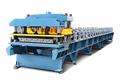
A purlin roll forming machine is a continuous bending system that converts flat metal coils – typically galvanized steel, aluminum, or pre-painted metal – into cold-formed C, Z, or U-shaped purlins. These profiles act as secondary structural supports in metal buildings, warehouses, carports, and steel-framed houses.
Unlike press braking or extrusion, roll forming is a progressive, high-speed process. The coil passes through a series of stationary roller dies, each station bending the metal slightly until the final shape is achieved.
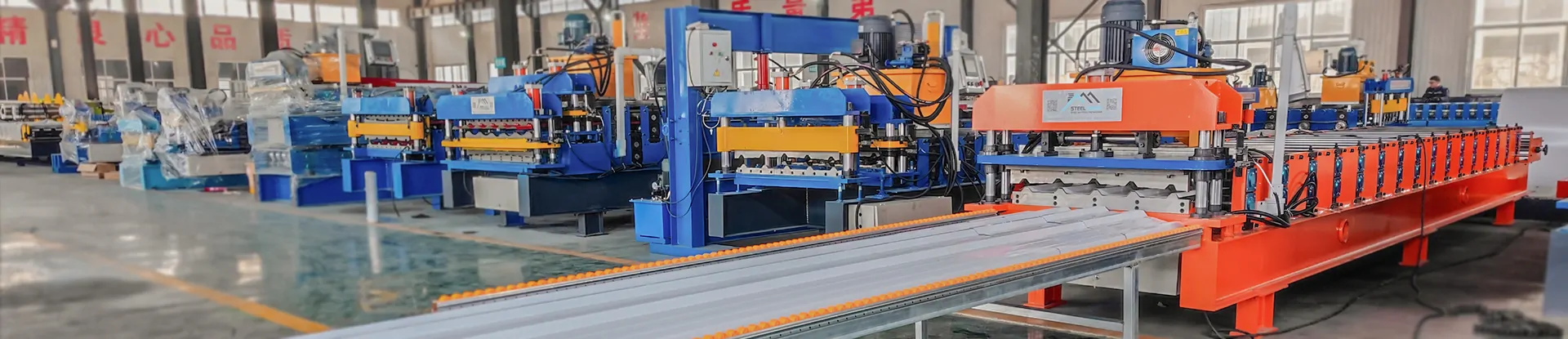
A standard purlin roll forming line includes several stages:
Decoiler – Holds and releases the metal coil.
Feeding & Leveling – Straightens the strip for accuracy.
Punching System (hydraulic or servo) – Pre-punches holes in web or flange for assembly.
Roll Forming Stations – Usually 14 to 22 passes to gradually shape the profile.
Cutting Unit – Flying hydraulic cutoff or servo-driven shear cuts purlins to length without stopping production.
Runout Table & Stacker – Collects finished purlins automatically.
The entire process is controlled by a PLC system, allowing operators to change length, hole pattern, and quantity via touchscreen.
In simple terms, this machine does three main jobs:
Forms structural purlins – Converts flat coil into precise C or Z profiles used in roof and wall framing.
Punches holes automatically – Eliminates secondary drilling for bolted connections.
Cuts to exact length – Produces ready‑to‑use purlins with square, burr‑free ends.
Metal building systems (warehouses, factories, aircraft hangars)
Agricultural structures (barns, equipment sheds)
Solar panel mounting frames
Mezzanine floors and container houses
High efficiency – Produce 12–30 meters per minute vs. manual bending.
Consistent quality – Every purlin has identical dimensions and hole positions.
Lower labor cost – One operator can run the entire line.
Material savings – Minimal scrap thanks to computer‑controlled cut‑to‑length.
Quick changeover – Automatic machines switch between C and Z purlins in under 5 minutes.
Fixed‑size C purlin machine – Dedicated to one profile dimension.
Manual changeover C/Z machine – Requires shims and spanner adjustments (30–60 minutes).
Automatic changeover C/Z purlin roll forming machine – Servo‑driven; changes width and profile direction automatically. Ideal for high‑mix, just‑in‑time production.
Steel building manufacturers who want to make purlins in‑house instead of buying them.
Roll forming job shops expanding into structural sections.
Construction companies working on large projects with repetitive purlin lengths.
Exporters looking for cost‑effective production of ASTM, JIS, or EN standard purlins.
A purlin roll forming machine is not just a metal bender – it is a complete production system that turns raw coil into precision structural components for modern steel buildings. Whether you need C purlins, Z purlins, or both, investing in the right roll former can cut material waste, reduce labor, and increase throughput.
Looking for a reliable purlin roll forming machine? [Contact us] for a free capacity analysis and quote.