Views: 296 Author: steelmama Publish Time: 2026-05-26 Origin: standing seam machine
If you’re a contractor, architect, or metal roofing manufacturer targeting the U.S. market, you’ve likely come across the term standing seam roll forming machine. But what exactly is this equipment, and why is it becoming essential for modern roofing projects?
In this guide, we’ll break down what a standing seam roll forming machine is, how it operates, and why investing in one can boost your roofing production efficiency—especially if you're supplying the American construction industry.
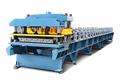
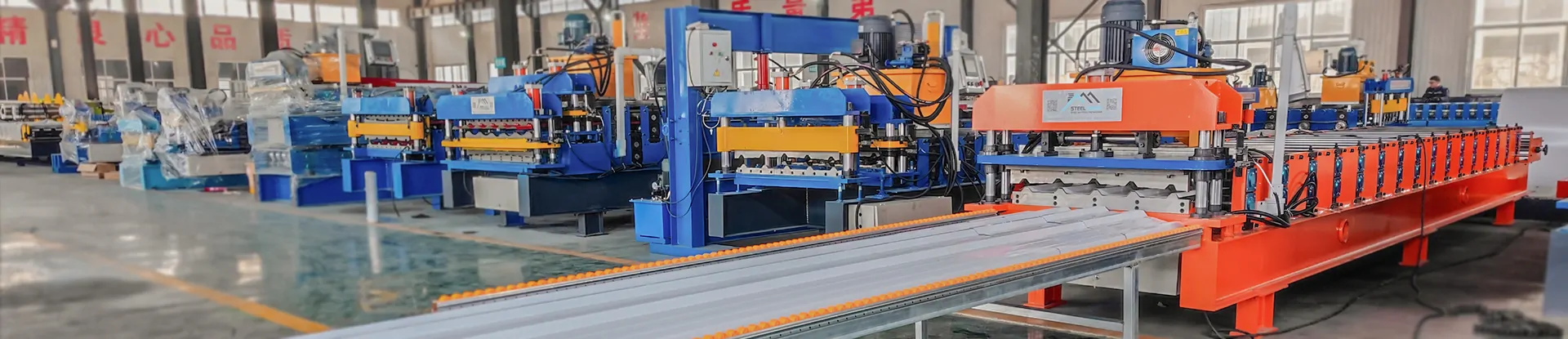
A standing seam roll forming machine is a specialized piece of industrial equipment used to produce metal panels with raised interlocking seams. These panels are widely used in standing seam metal roofing systems, which are popular across the U.S. for their durability, weather resistance, and sleek appearance.
Unlike standard roofing sheets, standing seam panels feature vertical legs that lock together above the roof plane. This design conceals fasteners and allows for thermal movement—key advantages in American climates ranging from Florida’s humidity to Minnesota’s snow loads.
The working principle of a standing seam roll forming machine is both simple and highly precise. Here is a step-by-step breakdown:
A metal coil (typically galvanized steel, aluminum, or copper) is loaded onto the machine’s uncoiler. The material width and gauge are set according to the desired panel profile.
The coil passes through a pre-flattening station to remove any curvature. A servo feeder controls the material advance with high accuracy.
This is the core of the standing seam roll forming machine. The metal strip travels through a series of rolling stations, each containing specially shaped rollers. As the strip moves forward, each roller pair gradually bends the metal until the final standing seam profile is achieved—complete with male and female interlocking edges.
Once the profile is formed, a hydraulic or servo-driven flying cut-off die shears the panel to the programmed length without stopping the production line. This ensures consistent, burr-free cuts.
Some advanced standing seam roll forming machines include automatic stackers or curving attachments for curved roofs, which are increasingly popular in modern U.S. architecture.
Depending on the machine configuration, you can produce several panel types:
Trapezoidal standing seam
Curved standing seam panels
Snap-lock versus mechanical lock profiles
Symmetrical and asymmetrical ribs
Each profile serves different wind uplift, drainage, and aesthetic requirements common in U.S. building codes (e.g., Miami-Dade County approval).
When evaluating machines for the U.S. market, look for:
Heavy-duty steel frame – Reduces vibration for tighter tolerances.
Variable frequency drives (VFDs) – Allows speed control from 0 to 50+ ft/min.
PLC control system – User-friendly touchscreen with memory for dozens of profiles.
Quick-change tooling – Switch between panel heights (e.g., 1.5″ to 2.5″) in under 30 minutes.
Safety guards and emergency stops – Meets OSHA requirements.
A standing seam roll forming machine is more than just a metal bender—it’s a complete production solution for the booming U.S. metal roofing industry. By understanding how it works and which features matter, you can select the right machine to increase profitability, reduce waste, and deliver high-quality standing seam panels faster than ever before.
Choosing the right standing seam roll forming machine requires careful evaluation of profile requirements, material compatibility, speed, automation, build quality, and after-sales support. By following this guide, you will avoid common mistakes and invest in a standing seam roll forming machine that boosts your productivity and profitability for years to come.
A standing seam roll forming machine is used to produce metal roofing panels with raised, interlocking seams. These panels are widely installed on residential homes, commercial buildings, agricultural structures, and even solar-ready roofs across the United States. The machine continuously bends flat metal coils into standing seam profiles, ensuring high precision and consistent quality.
A standing seam roll forming machine works by feeding a metal coil through a series of roller stations. Each pair of rollers gradually bends the flat strip until the desired standing seam shape — including male and female locking edges — is achieved. A hydraulic cutting system then shears the panel to a preset length. The entire process is automated using a PLC control system, allowing high-speed production with minimal manual intervention.
Most standing seam roll forming machines can process galvanized steel, galvalume, aluminum, and sometimes copper or stainless steel. The specific material thickness (gauge) depends on the machine’s roller design and motor power. For the U.S. market, common thicknesses range from 24 to 26 gauge for steel and 0.032″ to 0.050″ for aluminum.
A snap-lock standing seam panel is installed by pressing the panel edge into the clip until it snaps into place, requiring no special seaming tool. A mechanical-lock standing seam panel, on the other hand, requires a power seamer to crimp the seam tightly. Your choice of standing seam roll forming machine should support one or both lock types, depending on your project’s wind uplift and waterproofing requirements.
Yes, many advanced standing seam roll forming machines come with a curving attachment or can be integrated with a separate curving machine. This allows you to produce curved standing seam panels for barrel-vaulted roofs, circular buildings, and other architectural features increasingly popular in U.S. commercial projects.
Production speed varies by model, but a typical standing seam roll forming machine operates between 15 and 50 feet per minute (FPM). High-speed industrial models can reach up to 80 FPM. At 30 FPM, you can produce over 1,800 linear feet of panel per hour — more than enough for most roofing job sites.