Views: 563 Author: steelmama Publish Time: 2026-08-26 Origin: roll forming machine
Today, we are going to introduce our roll forming machine operation process—a comprehensive, factory-tested workflow designed to get your production line up and running with precision and efficiency. Whether you are setting up a brand-new system or training fresh operators, understanding every phase of this operation process is the foundation of successful metal forming.
In this guide, we will walk you through the complete roll forming machine operation process, from the moment the equipment arrives at your factory to the first push of the start button. Let's dive in.
Now the machine is arriving at your factory—this is where your roll forming machine operation process begins. Proper placement is critical for safety, material flow, and long-term performance.
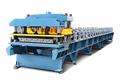
We locate the machines as a complete line in the correct place. The typical layout includes two primary components: this is the decoiler, and this is the roll forming machine itself. The distance between these two parts must be at least 3 meters—this clearance ensures smooth coil feeding and prevents tension fluctuations during the operation process.
After putting the decoiler and roll forming machine in the correct position, now make sure they are in a straight line. Even a minor angular deviation can cause tracking issues, edge waves, or uneven profiles. Use a laser alignment tool or a taut reference wire to verify perfect linear alignment before proceeding.

A stable foundation is non-negotiable in any roll forming machine operation process. Please make sure the floor is flat, clean, and hard—any debris or unevenness will transfer directly to your finished profiles.
Finally, adjust the machine to a leveling level. To make sure leveling of the machines, we could adjust the legs of the machine. Each leg features a threaded adjustment bolt that allows fine-tuning of height. Use this leveller (spirit level or digital inclinometer) to make sure it's leveling in both longitudinal and transverse directions. Proper leveling prevents unnecessary wear on bearings, rollers, and drive components, extending the service life of your roll forming machine.
After leveling the machine, fix the machine with the floor screws. Fix the machine with the floor screws to make sure they are fixed well on the floor. This anchoring step is vital—it prevents vibration-induced movement during high-speed operation process and ensures consistent product tolerances over thousands of production hours.


With the mechanical installation complete, the roll forming machine operation process moves to preparation of consumables and auxiliary systems.
Material Preparation: Please prepare the steel coils as per the profile drawing's request. Verify the coil width, thickness, grade, and surface condition match your production order. Using incorrect material is one of the most common mistakes in a roll forming machine operation process—double-check your specifications before loading.
Now is the hydraulic pump oil adding—this is a crucial maintenance step often overlooked by new operators. Open this cap and add the oil into it, and make sure the final scale is two-thirds on the sight glass. Overfilling or underfilling the hydraulic reservoir can lead to pump cavitation, overheating, or erratic shearing action, all of which disrupt the roll forming machine operation process.


Before applying power, perform a thorough electrical check—safety and reliability depend on it.
Electrical Wires Check: Make sure all the wires are connected well into the PLC control box, and make sure the voltage is stable. Loose terminals or unstable power supply are frequent culprits behind PLC faults, sensor errors, and unexpected shutdowns during the roll forming machine operation process. Verify that the incoming voltage matches the machine's nameplate rating and that all grounding connections are secure.
Steel Coil Loading: Load the steel coil into the decoiler. You could use the crane or forklift as for your factory situation. Ensure the coil is centered on the mandrel and that the expansion segments are firmly locked. Proper loading prevents telescoping and edge damage, which can cause jams later in the roll forming machine operation process.

Now it's time to energize the system and configure your production parameters.
Open the power switch and the touchscreen lights up. After entering the operation system, you could choose the language you need—our interface supports multiple languages to accommodate diverse operator backgrounds.
Now we are setting the orders for this production. On the touchscreen, input the following parameters:
Profile length and quantity
Cutting tolerances
Punching positions (if applicable)
Line speed
The PLC system stores hundreds of recipe presets, making the roll forming machine operation process highly repeatable and reducing setup time between job changes.


With all preparations confirmed, the roll forming machine operation process enters its final and most exciting stage.
Then we go to automatic production. The system will perform a series of self-checks—verifying encoder feedback, hydraulic pressure, and material tracking. Once all conditions are satisfied, press this button: start up.
From this moment, the roll forming machine runs autonomously. The decoiler feeds the strip, the roller stations progressively shape the metal, the flying shear cuts it to length, and the runout table stacks finished parts—all synchronized within a single, seamless roll forming machine operation process.

Even in automatic mode, the roll forming machine operation process requires vigilant monitoring. Our PLC touchscreen displays real-time data on:
Production count vs. target
Current line speed
Hydraulic pressure and temperature
Motor load percentages
Any deviation triggers an audible alarm and pauses the operation process, allowing operators to intervene before scrap is produced.
Above introduction is the complete operation process for cold roll forming machine production—from delivery and positioning to leveling, oil filling, wiring, loading, and finally automatic startup. This systematic roll forming machine operation process ensures that every component works in harmony, delivering profiles with exceptional accuracy and surface finish.
We have designed this operation process to be intuitive, safe, and repeatable, whether you are producing C-purlin, roofing sheets, storage racks, or custom architectural profiles. With proper adherence to these steps, your roll forming machine will provide decades of reliable service.
If there are any questions, welcome to contact us freely. Our technical support team is available 24/7 to assist with troubleshooting, spare parts, or custom training for your roll forming machine operation process. We don't just sell machines—we partner with you to ensure your cold roll forming machine production runs at peak efficiency.
Phone: +86 177-6155-5057
Email: arno@steelmama.com